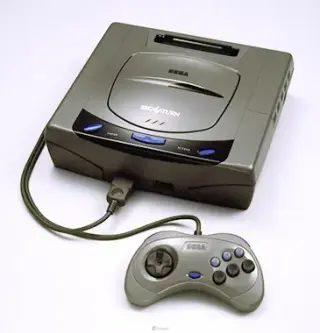
Sega Saturn
Technical Specs
CPU
2x Hitachi SH-2 (SH7604) 32-bit RISC @ 28.6 MHz each; Hitachi SH-1 32-bit RISC @ 20 MHz (CD-ROM controller); Motorola 68EC000 @ 11.3 MHz (sound processor); SCU (System Control Unit) with integrated DSP @ 14.3 MHz for geometry processing
GPU
VDP1 (Video Display Processor 1): sprite and polygon engine, renders textured/gouraud-shaded quads and polygons, 200,000 texture-mapped polygons/sec, 500,000 flat-shaded polygons/sec; VDP2 (Video Display Processor 2): 5 simultaneous scroll planes with independent rotation and scaling, bitmap and cell-based modes, 24-bit color
Memory
2 MB main RAM, 1.5 MB VRAM (VRAM split: 512 KB VDP1 framebuffer, 512 KB VDP1 texture, 512 KB VDP2 VRAM), 512 KB sound RAM, 512 KB CD buffer RAM, 32 KB battery-backed SRAM; expandable via cartridge slot (1 MB or 4 MB RAM carts for Capcom fighters)
Storage
Internal battery-backed SRAM (32 KB, approximately 34 blocks), Cartridge slot for RAM expansion and backup memory cartridges
Display
Resolution: 320x224, 352x224, 320x240, 352x240 (standard), 640x224, 640x240, 704x480 (high-res interlaced); up to 16.77 million colors (24-bit), VDP2 supports rotation, scaling, mosaic, color offset, shadow, and priority mixing effects per layer
Audio
Yamaha FH1 (SCSP - Saturn Custom Sound Processor): 32 channels PCM (16-bit, 44.1 kHz max), FM synthesis capable, integrated DSP with 128-step microprogram for hardware reverb, chorus, and effects
Media
CD-ROM (2x speed, 320 KB/s), supports CD-DA and Video CD (with optional MPEG card)
History
The Sega Saturn, launched November 22, 1994 in Japan, was Sega's entry into the fifth-generation console race and one of the most technically complex gaming systems ever designed. Named after the planet Saturn, the console was engineered to be a 2D powerhouse with hastily added 3D capabilities, a design compromise that defined both its strengths and its tragic commercial fate.
The Saturn's architecture was extraordinary. It used dual Hitachi SH-2 processors running at 28.6 MHz, complemented by six additional processors including the VDP1 for sprite and polygon rendering, VDP2 for background and scroll plane handling, a Motorola 68EC000 for sound control, a Hitachi SH-1 for CD-ROM access, and a dedicated Saturn Control Unit (SCU) with a DSP for geometry processing. This multi-processor design delivered raw theoretical performance that exceeded the PlayStation in many respects, particularly for 2D graphics.
In Japan, the Saturn was a genuine success. It outsold the PlayStation for almost two years, buoyed by the massive popularity of Virtua Fighter 2, which was the system's killer app. The Japanese Saturn library is revered: Panzer Dragoon Saga (a landmark RPG with morphing dragon mechanics), Radiant Silvergun (one of the greatest shooters ever), Guardian Heroes (a genre-defining beat-em-up), NiGHTS into Dreams (Yuji Naka's surrealist masterpiece), Dragon Force, Burning Rangers, Shining Force III, and definitive versions of Capcom fighting games like Street Fighter Alpha 3 and X-Men vs. Street Fighter running with the 4MB RAM expansion cartridge.
In North America, the Saturn's story was catastrophic. The surprise early launch at E3 1995 ??announced as available 'right now' at $399, four months ahead of schedule ??blindsided retailers and developers alike. Major retail chains that were excluded from the early launch, including Walmart and KB Toys, responded by dropping Sega products entirely. The PlayStation launched four months later at $299 and rapidly seized market dominance.
The Saturn sold approximately 9.26 million units worldwide, with over 5.7 million in Japan alone. Despite its commercial failure in Western markets, the Saturn is considered one of the greatest cult consoles in gaming history, with a library that remains highly playable and collectible today.
Variants & Revisions
Sega Saturn Model 1 (HST-3200, Japan)
Released: November 22, 1994
The original Japanese model with oval-shaped controller buttons, access door for optional Video CD card, and gray color scheme. Launched at ?44,800.
Sega Saturn (MK-80000, North America)
Released: May 11, 1995
The North American model surprise-launched at E3 1995 at $399, four months ahead of the planned September date. Identical internals to Japanese Model 1.
Sega Saturn Model 2 (HST-3220, Japan / MK-80000A, NA)
Released: March 1, 1996
Cost-reduced redesign with smaller form factor, round controller buttons, and simplified internal board layout. Available in multiple colors in Japan.
Hi-Saturn (Hitachi MMP-1)
Released: April 1, 1995
A licensed multimedia variant by Hitachi with built-in MPEG Video CD decoder, Photo CD support, and higher-quality components. Premium price point.
V-Saturn (Victor/JVC RG-JX1/RG-JX2)
Released: November 22, 1994
A licensed variant by JVC with built-in Video CD support, sold alongside the standard Saturn in Japan at the same launch date.
Samsung Saturn
Released: January 1, 1995
A licensed variant produced and distributed by Samsung for the South Korean market. Identical hardware with Samsung branding.
Development Story
The Sega Saturn's development is a cautionary tale of brilliant engineering undermined by corporate dysfunction, panic-driven design changes, and catastrophic strategic decisions. The console was originally designed by Sega's hardware team, led by Hideki Sato, as the ultimate 2D gaming machine ??a natural evolution of the Genesis/Mega Drive that would dominate the sprite-based arcade market that Sega knew best.
The initial Saturn design centered on a single SH-2 processor paired with the VDP1 sprite engine and VDP2 background processor. The architecture was elegant for 2D: VDP1 could render and manipulate an enormous number of sprites with scaling, rotation, and distortion effects, while VDP2 handled up to five scrolling background layers with independent rotation and scaling. No competing system could match this 2D prowess.
Then came the shock. In late 1993, Sony demonstrated the PlayStation's 3D capabilities at trade shows, revealing hardware that could render textured polygons with impressive speed and visual quality. Sega's leadership panicked. The decision was made to add a second SH-2 processor and reposition the Saturn as a 3D-capable machine. This late-stage architectural change had enormous consequences.
The dual-SH-2 design was theoretically powerful ??two 28.6 MHz RISC processors working in parallel could handle complex 3D calculations. However, actually programming two CPUs to work efficiently in parallel was extraordinarily difficult. The PlayStation's single-CPU architecture with dedicated 3D hardware was far more developer-friendly. The PS1's Geometry Transformation Engine handled polygon math in dedicated silicon, while the Saturn required developers to manually split geometry calculations across two general-purpose CPUs and the SCU's DSP.
The Saturn's VDP1 rendered quadrilaterals (four-sided polygons) rather than triangles, which was unusual and created challenges for developers porting games from triangle-based platforms. Additionally, the Saturn lacked hardware-accelerated texture perspective correction, causing the characteristic 'warping' effect visible in many Saturn 3D games.
The surprise North American launch in May 1995 was orchestrated by Sega of America president Tom Kalinske under pressure from Japan. The rationale was to establish a market presence before the PlayStation's September launch. Four retailers received early units (Toys 'R' Us, Babbage's, Software Etc., and Electronics Boutique) at $399 each. Other retailers were furious. KB Toys' buyer reportedly told a Sega representative: 'You just made a different mistake every time.' The early launch meant only six titles were available, compared to the PlayStation's roughly twenty at its (planned) launch.
Bernie Stolar, who later became president of Sega of America after Kalinske's departure, compounded the Saturn's Western struggles with statements like 'the Saturn is not our future' and a publicized reluctance to release Japanese RPGs in the West. While Stolar's intent was to pivot messaging toward the upcoming Dreamcast, his comments actively discouraged developers and consumers from investing in the Saturn platform during a period when it still needed support.
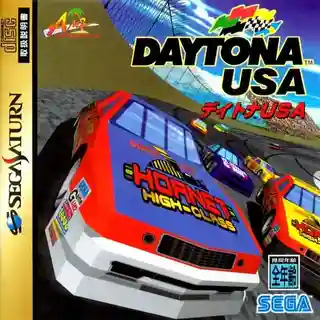
Daytona USA
• 1995
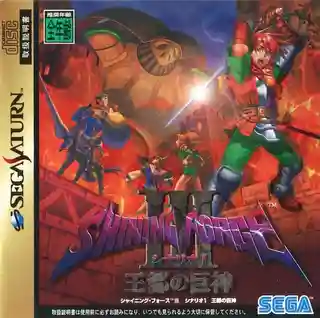
Shining Force III
• 1997
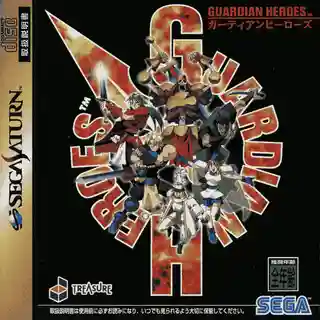
Guardian Heroes
• 1996
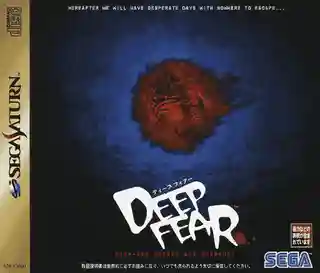
Deep Fear
• 1998
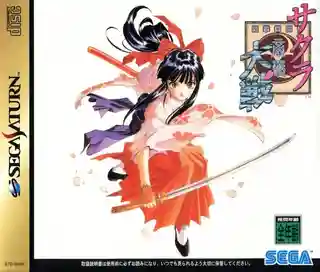
Sakura Wars
• 1996
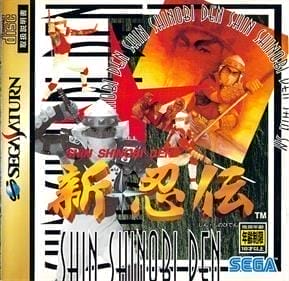
Shinobi Legions
• 1995
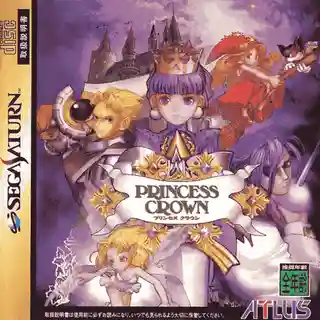
Princess Crown
• 1997
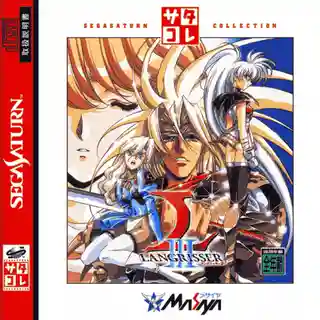
Langrisser III
• 1996
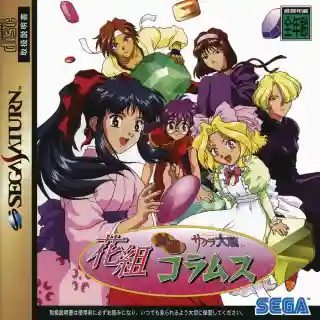
Sakura Wars: Hanagumi Taisen Columns
• 1997
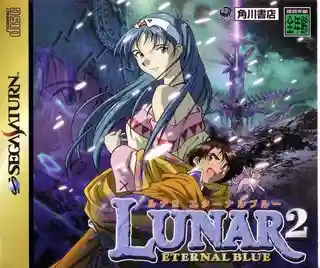
Lunar: Eternal Blue
• 1998
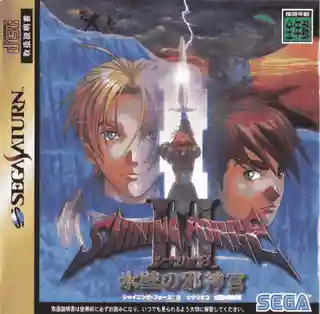
Shining Force III Scenario 3: Bulzome Rising
• 1998
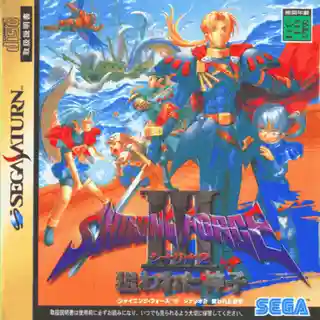
Shining Force III Scenario 2: Target: Child of God
• 1998
About the Sega Saturn
The Sega Saturn (SAT) is a home video game console manufactured by Sega. Released on November 22, 1994, it belongs to the 0th generation of gaming hardware.
With a library of 14+ ROMs available to download, the SAT remains one of the most popular platforms for retro gaming enthusiasts. Each ROM is available for free download and compatible with popular emulators like RetroArch, giving you instant access to classic gaming history.
Whether you're looking for SAT ROMs to play on your PC, phone, or dedicated retro handheld, our library has you covered with verified ROM files and complete game information.