
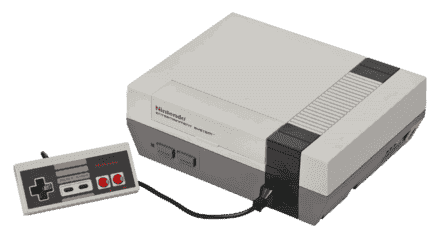
NES
Kirby's Adventure
The 1993 NES platformer that introduced Kirby's iconic copy abilities. Players guide the pink hero through seven dreamy worlds to restore the shattered Star Rod and save Dream Land from Nightmare's dark influence.
Release Date
January 1, 1993
Developer
HAL LaboratoryPublisher
HAL Laboratory
Players
1
Region
US
ROM Size
768 KB
Share this game
Gameplay Systems
Like its predecessor Kirby's Dream Land (1992), Kirby's Adventure is a 2D side-scrolling platform game . In the game's scenario, an evil entity named Nightmare corrupts the Fountain of Dreams, which provides restful sleep to the residents of Dream Land. King Dedede steals the Star Rod that powers the fountain and gives pieces of it to his friends in an effort to stop Nightmare. Kirby , the player character of the single-player game, mistakenly believes that Dedede stole the rod for evil and sets out to reunite the pieces. When Kirby defeats Dedede and returns the rod to the fountain, Nightmare goes into outer space to spread bad dreams , but Kirby follows him and uses the rod's power to defeat him. Kirby retains his abilities from Kirby's Dream Land : he can walk left or right, crouch, and jump. : 13–14 To attack, Kirby inhales enemies or objects and spits them out as star-shaped bullets. : 16–17 He can also fly by inflating himself; while flying, Kirby cannot attack or use his other abilities, but he can exhale at any time, releasing a puff of air that cancels his flight and can be used to damage enemies or destroy blocks. : 15 New moves include the abilities to run at a fast pace and to perform a sliding kick. : 17 A major aspect of the game is Kirby's copy abilities. By inhaling and swallowing certain enemies, Kirby will obtain powers based on the special ability the enemy possessed. Copy abilities allow Kirby to access new areas and experience levels in different ways. Certain copy abilities can only be used a limited number of times. Kirby can discard his ability at any time or lose it when he is hit by an enemy; he must reacquire it quickly or it will disappear. : 20 The game consists of forty-one levels across seven worlds, each containing a lobby with doors leading to four to five regular levels, a boss fight , and a Warp Star door which enables Kirby to travel back to previous worlds. : 11 Most worlds also contain minigames <ref name=\"manual\"/>{{rp|23–24}}"}},"i":0}}]}'> which allow Kirby to gain extra lives , : 23 museums where Kirby may easily gain certain powers, and arenas where Kirby must battle with a miniboss to win health and allow him to copy the boss's special ability. : 30 The game automatically saves the player's progress after each level. : 25 The objective of each main level is simply to reach its end. If Kirby touches an enemy or a dangerous object, he will lose a section of his health meter. If all of his health is lost or he falls off the bottom of the screen, the player loses a life. Losing all lives results in a game over . : 21 Kirby can touch or eat food items to replenish health or gain temporary invulnerability .
Media Reviews
IGN
12
GameSpot
1993
Famitsu
9/10
Eurogamer
16
Electronic Gaming Monthly
8/10
EGM
8/10
Nintendo Power
12
Some information sourced from Wikipedia, available under CC BY-SA 3.0.