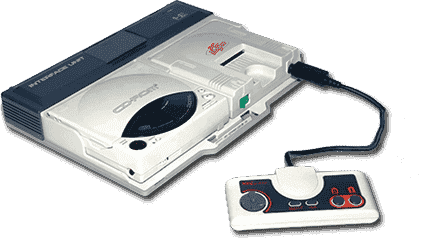
PC Engine / TurboGrafx-16
NEC's compact but powerful console. The PC Engine/TurboGrafx-16 was beloved for its shoot 'em ups and CD add-on games.
Technical Specs
CPU
Hudson Soft HuC6280 (modified WDC 65C02, 8-bit) @ 7.16 MHz (switchable to 3.58 MHz for compatibility), integrated PSG sound generator, timer, and I/O controller
GPU
Hudson Soft HuC6270 VDC (Video Display Controller, 16-bit) + HuC6260 VCE (Video Color Encoder); handles sprite rendering, background scrolling, and DMA transfers; 64 sprites on screen (16 per scanline), 2 background layers via split-screen trick
Memory
8 KB main work RAM, 64 KB dedicated VRAM; CD-ROM? adds 64 KB additional RAM + 64 KB ADPCM buffer; Super CD-ROM? adds 256 KB RAM; Arcade CD-ROM? adds 2 MB RAM
Storage
HuCard (credit card-sized ROM, up to 8 Mbit / 1 MB), CD-ROM via add-on (540 MB capacity)
Display
Resolution: 256x224, 320x224, 512x224, 512x240 (various modes); 482 simultaneous colors from 512-color palette (9-bit RGB, 3 bits per channel); 64 sprites (up to 16x64 pixels), tile-based backgrounds with per-scanline scrolling
Audio
HuC6280 integrated PSG: 6 wavetable channels (stereo, 5-bit volume per channel), 2 channels convertible to direct D/A for PCM sample playback; CD-ROM? adds ADPCM channel and CD-DA (Red Book Audio) playback
Media
HuCard (proprietary credit card-format ROM cartridge), CD-ROM (via CD-ROM?/Super CD-ROM?/Arcade CD-ROM? add-ons), Audio CD playback with CD add-on
History
The PC Engine, released October 30, 1987 in Japan, was a groundbreaking console born from an unprecedented partnership between game developer Hudson Soft and electronics manufacturer NEC. In North America, it was marketed as the TurboGrafx-16, launching on August 29, 1989. Despite its modest market share outside Japan, the PC Engine was a technological trailblazer that introduced innovations years ahead of the mainstream industry.
The console was remarkably compact ??it remains one of the smallest major consoles ever produced, roughly the size of a CD jewel case. Despite its diminutive dimensions, the PC Engine packed impressive hardware. The Hudson Soft HuC6280 CPU, a modified 65C02 running at 7.16 MHz, was the fastest processor in any home console at its 1987 launch. The HuC6270 VDC could display 482 colors simultaneously from a 512-color palette and handle 64 sprites, enabling visuals that rivaled and sometimes exceeded the Famicom and Sega Mark III.
The PC Engine's most historically significant contribution was pioneering CD-ROM gaming for consoles. The CD-ROM? System, released in December 1988, made the PC Engine the first console platform to offer CD-ROM-based games, beating the competition by years. This CD capability enabled voice acting, Red Book audio soundtracks, and dramatically larger games. The platform later received the Super CD-ROM? upgrade (1991) with more RAM and faster access, and the Arcade CD-ROM? (1994) for even greater capacity.
In Japan, the PC Engine was a phenomenal success. It briefly outsold the Famicom in late 1987 and maintained a strong market position through the early 1990s. The system was especially popular for shoot-em-ups ??Blazing Lazers, R-Type, Soldier Blade, Lords of Thunder, and Gate of Thunder were among the genre's finest entries. The RPG library was equally impressive: the Ys series (Ys I & II CD featured a legendary Red Book Audio soundtrack), Tengai Makyou (Far East of Eden), and Dungeon Explorer offered deep role-playing experiences enriched by CD audio and voice acting.
In North America, the TurboGrafx-16 struggled despite strong critical reception. NEC's marketing was unable to compete with Sega's aggressive Genesis campaigns, and the system's '16-bit' branding was misleading (its CPU was 8-bit, though the GPU was 16-bit). Limited third-party support and a late North American launch further hampered sales. The TurboGrafx-CD add-on was even more niche.
Total PC Engine family sales are estimated at approximately 10 million units, predominantly in Japan. The console's legacy as a CD-ROM gaming pioneer and its exceptional Japanese library of shooters and RPGs have made it a cherished collector's platform.
Variants & Revisions
PC Engine (PI-TG001, Japan)
Released: October 30, 1987
The original Japanese model ??remarkably compact, roughly the size of a CD case. White/cream colored with a single controller port and HuCard slot. Required optional multitap for multiplayer.
TurboGrafx-16 (TG16, North America)
Released: August 29, 1989
The North American redesign with a larger, more angular black case. Launched at $199.99 with Keith Courage in Alpha Zones as the pack-in game.
PC Engine CoreGrafx / CoreGrafx II
Released: December 8, 1989
Revised Japanese models with AV output improvements and updated aesthetics. The CoreGrafx II (1991) featured a dark blue color scheme.
PC Engine Duo / TurboDuo
Released: September 21, 1991
Combined the base console and Super CD-ROM? into a single unit. Played HuCards, CD-ROM?, and Super CD-ROM? titles. Featured 256 KB extra RAM.
PC Engine GT / TurboExpress
Released: December 1, 1990
A portable handheld version with a 2.6-inch backlit color TFT LCD that could play standard HuCards. The most advanced handheld of its era. Poor battery life (~3 hours on 6 AAs). Launched at $249.99.
PC Engine LT
Released: December 13, 1991
A laptop-style PC Engine with a built-in 4-inch active matrix LCD screen, hinged lid design, and built-in stereo speakers. Extremely rare collector's item.
PC Engine Shuttle
Released: November 22, 1989
A budget-friendly Japanese variant with a rounded, futuristic design. Removed the expansion port, making it incompatible with CD-ROM add-ons.
Development Story
The PC Engine's development story begins with one of gaming's most unusual corporate partnerships. Hudson Soft, a software developer known for Bomberman and Adventure Island, had no hardware manufacturing experience. NEC, a major electronics and computing conglomerate, had no presence in the gaming market. Together, they created a console that punched far above its corporate weight.
The hardware was designed primarily by Hudson Soft's engineering team. Hudson's engineers were intimately familiar with the limitations of existing consoles from their experience as one of Nintendo's earliest and most prolific third-party developers. They designed the custom HuC6280 CPU and HuC6270 VDC chips to address specific frustrations they had encountered developing games for the Famicom. The result was a console optimized for fast, colorful 2D game rendering with minimal programming overhead.
The decision to use HuCards ??credit card-sized ROM media ??was driven by both technical and practical considerations. The thin, flat format allowed the console itself to be extraordinarily compact. HuCards also had faster load times than standard cartridges due to their direct bus connection. Interestingly, the format was based on technology originally developed by Hudson Soft for a series of add-on HuCards for the Sharp X1 computer.
The CD-ROM? add-on's development was championed by Hudson Soft president Takahashi Meijin (real name: Takahashi Toshiyuki), who recognized that CD-ROM was the future of game distribution well before the concept was mainstream. The CD-ROM? used a standard CD-ROM drive mechanism and added 64 KB of additional RAM and 64 KB of ADPCM buffer memory. The system cost ?57,300 in Japan, making the total PC Engine + CD-ROM setup a premium product.
The creation of the TurboGrafx-16 for North America involved more than just localization. NEC Home Electronics formed an American division specifically to launch the product, but the marketing effort was plagued by organizational inexperience. NEC's corporate culture ??accustomed to selling business computers and telecommunications equipment ??clashed with the fast-paced, youth-targeted world of video game marketing. While Sega hired aggressive ad agencies and waged the 'Console Wars' with irreverent campaigns, NEC's TurboGrafx-16 advertising was comparatively restrained and uninspired.
The PC Engine GT (TurboExpress in North America) was an ambitious portable version that could play standard HuCards on a built-in backlit color LCD. Released in 1990, it was arguably the most advanced handheld of its era ??a full-color, backlit portable that played the same game cards as the home console. However, its $249 price and terrible battery life (approximately 3 hours on 6 AA batteries) limited its market. The TurboExpress quietly foreshadowed the idea of home-portable gaming convergence that companies like Nintendo would later pursue with the Switch.
Despite its relatively modest sales figures, the PC Engine's influence on the gaming industry was substantial. It proved that CD-ROM was viable for console gaming, established voice acting and CD-quality music as standard production values, and demonstrated that a non-traditional partnership between a software developer and an electronics manufacturer could produce competitive hardware.
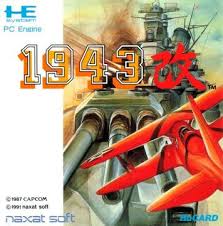
1943 Kai: Midway Kaisen
• 1991
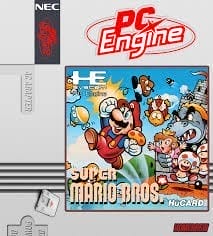
Super Mario Bros.
• 1993
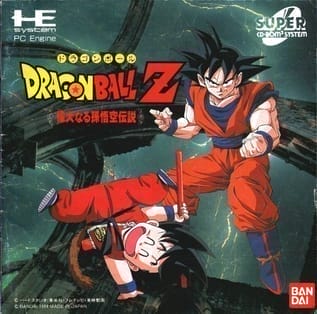
Dragon Ball Z: The Legend of the Mighty Son Goku
• 1993
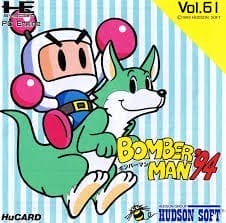
Bomberman '94
• 1993
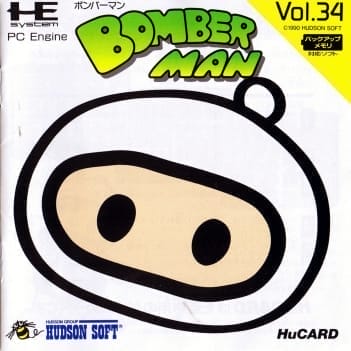
Bomberman
• 1991
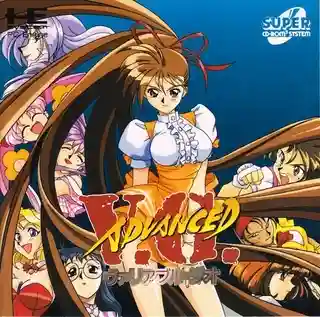
Advanced Variable Geo
• 1996
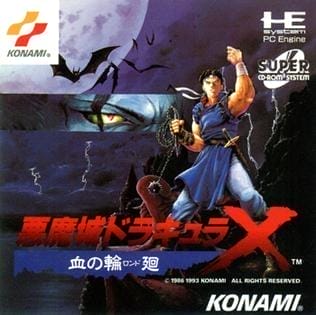
Castlevania: Rondo of Blood
• 1993
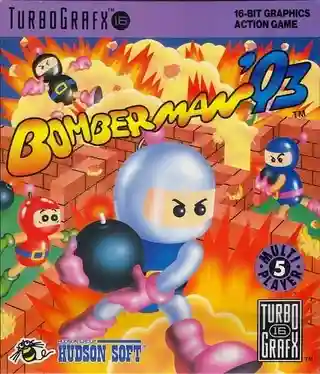
Bomberman '93
• 1992
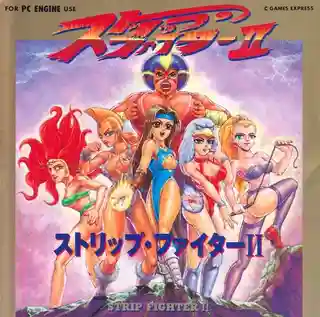
Strip Fighter II
• 1993

City Hunter
• 1989
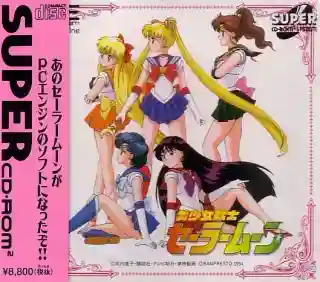
Pretty Soldier Sailor Moon
• 1993
Galaga '90
• 1990
About the PC Engine / TurboGrafx-16
The PC Engine / TurboGrafx-16 (PCE) is a home video game console manufactured by NEC. Released on October 30, 1987, it belongs to the 3th generation of gaming hardware.
With a library of 40+ ROMs available to download, the PCE remains one of the most popular platforms for retro gaming enthusiasts. Each ROM is available for free download and compatible with popular emulators like RetroArch, giving you instant access to classic gaming history.
Whether you're looking for PCE ROMs to play on your PC, phone, or dedicated retro handheld, our library has you covered with verified ROM files and complete game information.