
Toaplan
Legendary shmup developers
Notable Games
Company History
Toaplan Co., Ltd. was founded in 1984 in Tokyo, Japan. The company became one of the most influential developers of arcade shoot-em-ups, producing a catalog of genre-defining titles that influenced the entire shooter genre for decades to come.
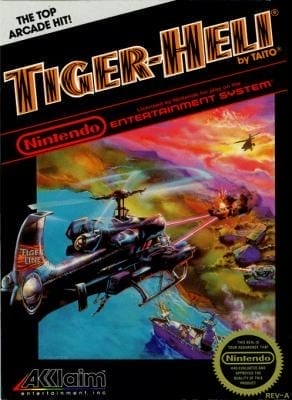
From 1984 until its bankruptcy in 1994, Toaplan produced approximately 30 arcade games, primarily vertical and horizontal scrolling shooters. Tiger-Heli (1985) established the company's capabilities. Twin Cobra (1987, known as Kyukyoku Tiger in Japan) demonstrated refined gameplay and detailed sprite work. Truxton (Tatsujin, 1988) achieved classic status with its balanced difficulty and satisfying power-up systems.
Zero Wing (1989) achieved unexpected immortality through its poorly translated European release ("All your base are belong to us" became one of gaming's first viral memes in 2000). Beyond the meme, Zero Wing was a competent horizontal shooter representative of Toaplan's quality standards.
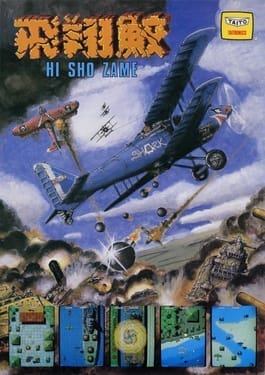
Fire Shark (1990), Hellfire (1989), and Grind Stormer (1992) continued the company's prolific output. However, Batsugun (1993) proved Toaplan's most historically significant final work. The game's dense bullet patterns and scoring systems are widely credited as establishing the "bullet hell" (danmaku) sub-genre that would later be perfected by companies like Cave.
Financial difficulties forced Toaplan into bankruptcy in 1994. The company's closure scattered talented developers who went on to found multiple successor studios: Cave, Raizing, Takumi, and Gazelle all trace their origins to former Toaplan staff. This diaspora spread Toaplan's design philosophy across the subsequent generation of shoot-em-up development.
Behind the Scenes
Toaplan's development approach balanced accessibility with challenge. Their shooters needed to attract coins from casual players while providing depth for dedicated fans. This equilibrium required careful difficulty curves — early stages inviting, later stages demanding, but always fair.
The company's sprite design achieved personality through limitations. Memory constraints forced efficient artwork, but Toaplan artists created memorable enemies and bosses from minimal pixels. The organic, mechanical contrasts in games like Truxton established visual language that successors would inherit.
Batsugun's development represented both evolution and endpoint. Lead designer Tsuneki Ikeda pushed bullet density beyond previous Toaplan standards, creating patterns that filled screens with projectiles while maintaining barely-visible safe passages. This approach — overwhelming visual spectacle requiring precise micro-movement — became bullet hell's defining characteristic.
The scoring systems in late Toaplan games rewarded aggression and risk-taking. Collecting power-ups at maximum level converted them to points. Destroying enemies rapidly triggered score multipliers. These mechanics encouraged skilled players to optimize runs rather than merely survive, creating competitive depth.
Toaplan's bankruptcy resulted from business factors rather than creative failure. Japanese arcade market contraction in the early 1990s pressured all arcade developers. Toaplan lacked the console development expertise to transition effectively.
The diaspora following bankruptcy proved remarkably productive. Cave's founders brought Toaplan's technical and design expertise to new heights. Raizing's Battle Garegga refined systems Toaplan developed. The shoot-em-up genre's subsequent evolution directly traced through Toaplan's final years. In this sense, Toaplan's influence extended far beyond its operational existence.
About Toaplan
Toaplan is a defunct game development company founded on January 1, 1984 and headquartered in .
Known for creating iconic titles such as Truxton/Tatsujin, Zero Wing, Batsugun and more, Toaplan has left an indelible mark on the video game industry.